NGO Compliance in India: Essential Records Every Charitable Trust Should Maintain
Discover the essential records NGOs and charitable trusts in India should maintain, from registration documents and financial statements to donation receipts, tax filings and grant records. Learn how organized documentation and digital tools like CharityERP can simplify record-keeping and support compliance.
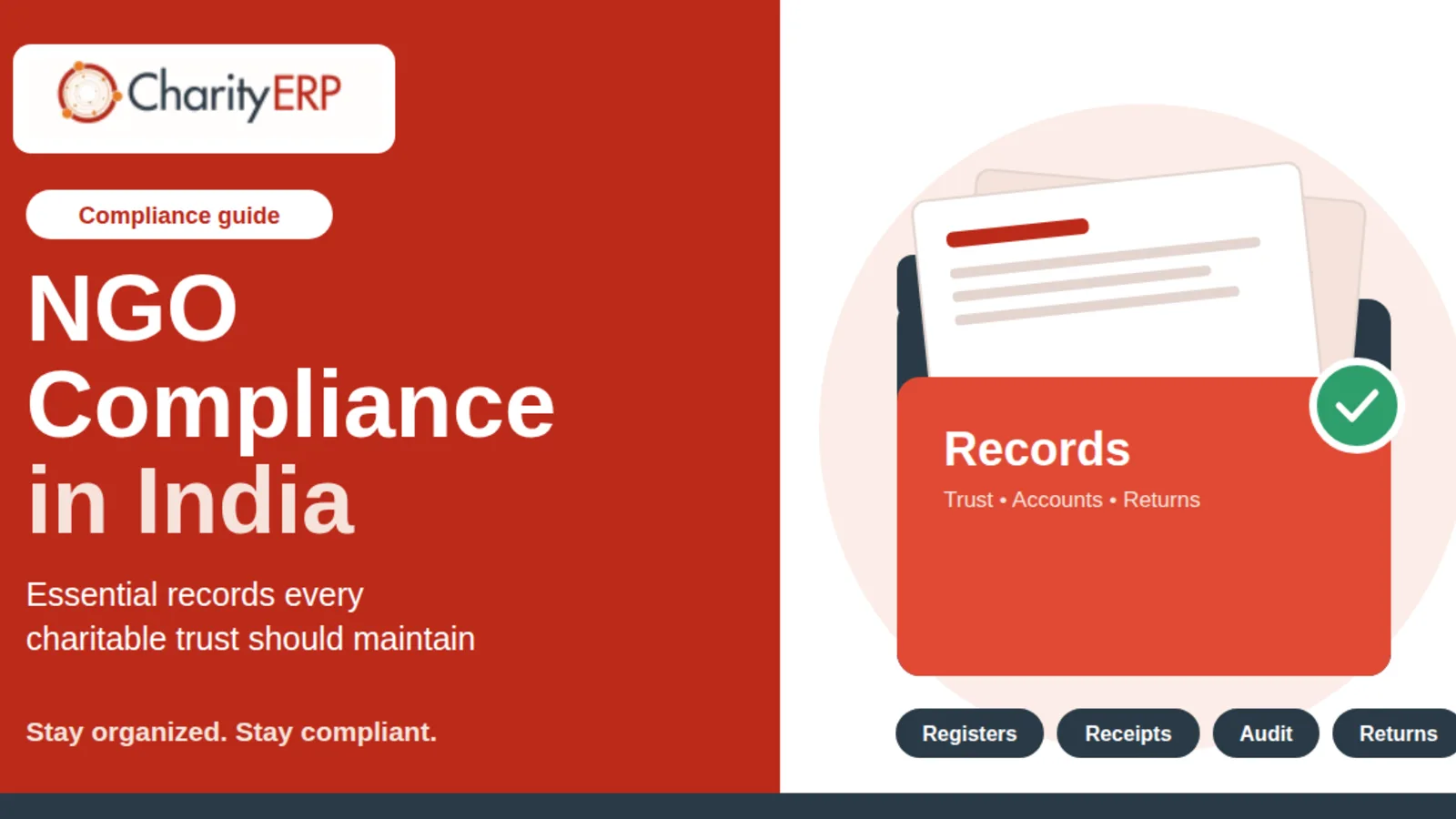
Running an NGO in India involves more than delivering charitable services. Organizations must maintain accurate records, manage finances responsibly and meet the legal requirements applicable to their activities.
Proper documentation helps NGOs improve transparency, prepare for audits and manage statutory filings. Requirements vary according to the organization's legal structure, registrations, funding sources and activities.
1. Registration and Governing Documents
Keep important organizational documents organized and up to date, including:
Trust deed or memorandum of association.
Registration certificates and PAN details.
Trustee or governing-body records.
Meeting minutes and resolutions.
Relevant approvals and official correspondence.
2. Financial Records and Accounting
Maintain accurate financial records to track income, expenditure and the organization's financial position. These may include bank statements, cash books, ledgers, invoices, expense vouchers, bank reconciliations and financial statements.
Review transactions regularly and confirm applicable accounting and record-retention requirements with a qualified professional.
3. Donation Records and Receipts
NGOs should maintain complete donation records, including donor details where appropriate, donation amounts, dates, payment references and receipt numbers.
Reconcile online donations and bank credits regularly. Keep receipt copies and supporting documents organized, while restricting access to confidential donor information.
4. Section 12AB and Section 80G Documents
Eligible organizations may have Section 12AB registration and Section 80G approval under applicable income-tax provisions. These serve different purposes, so NGOs should maintain the relevant certificates, approval orders, applications and correspondence.
Check current requirements through the Income Tax Department and seek professional advice when necessary.
5. Audit and Tax Filing Records
Depending on the applicable rules and the organization's circumstances, records may include financial statements, audit reports, income-tax returns, filing acknowledgements and supporting documents.
Maintain a compliance calendar for relevant deadlines and confirm obligations with a chartered accountant or other qualified professional.
6. Foreign Contributions and Grant Records
NGOs receiving foreign contributions must follow applicable requirements under the Foreign Contribution (Regulation) Act, 2010. They should verify their obligations through the Ministry of Home Affairs FCRA portal.
Organizations receiving grants or restricted donations should also maintain grant agreements, approved budgets, project expenses, utilization statements and progress reports.
7. Use Digital Tools to Organize Records
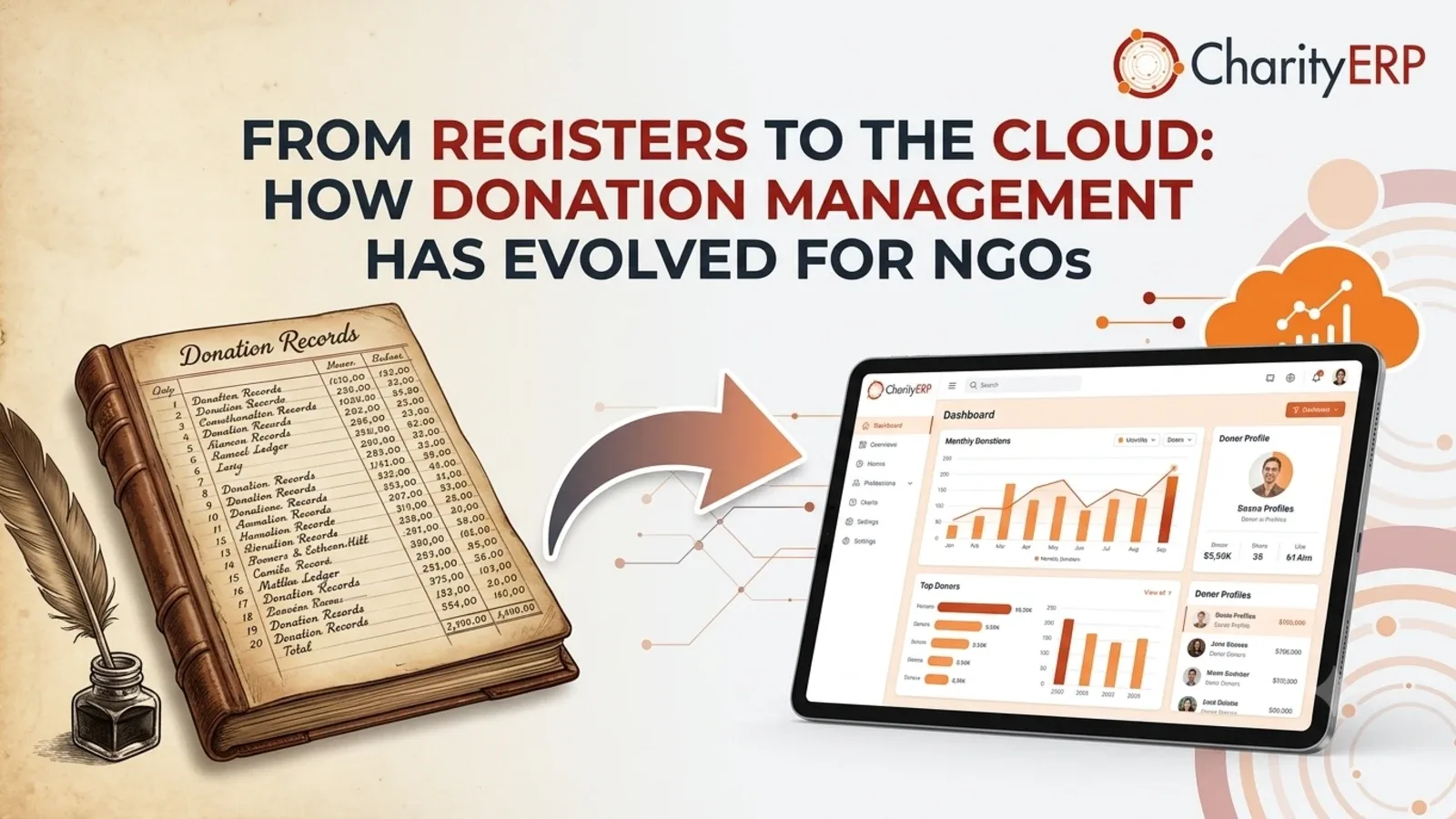
Managing information across paper files and spreadsheets can be time-consuming. Digital tools can help NGOs organize donor information, generate receipts, retrieve donation histories and prepare reports.
CharityERP offers donation management features, including donor and donation records, online donation collection, PDF receipts, automated acknowledgements, reporting and Tally-related accounting workflows.
These tools can support administrative efficiency but do not replace statutory filings, audits or professional compliance advice.
NGO Compliance Checklist
Review whether your organization has:
Updated registration and governing documents.
Accurate financial and bank records.
Organized donation records and receipts.
Relevant tax registration and approval documents.
Reviewed applicable audit and filing deadlines.
Maintained grant and foreign contribution records, where applicable.
Protected confidential information and secured digital backups.
This checklist is a starting point; requirements depend on the organization’s specific circumstances.
Conclusion
Effective NGO compliance starts with accurate records, consistent accounting and an understanding of applicable legal obligations. Organized documentation can improve transparency, simplify reporting and help charitable organizations prepare for audits and reviews.
Digital tools can streamline donation record management, while qualified professionals can guide NGOs on their specific compliance requirements.
Explore CharityERP's donation management features to see how they may support your organization's record-keeping workflows.
Frequently Asked Questions
What records should an NGO maintain in India?
Depending on its activities and legal structure, an NGO may need registration documents, accounting records, bank statements, donation receipts, financial statements, tax filings and project records.
Is an audit mandatory for every NGO?
Audit requirements depend on applicable laws and the organization's circumstances. Seek professional advice to determine your obligations.
Do all NGOs need FCRA registration?
No. FCRA requirements apply to organizations receiving or seeking to receive foreign contributions under the applicable law.
Can software manage NGO compliance automatically?
Software can organize records and simplify reporting, but it cannot guarantee compliance or replace professional review.